Back to work Case 04 / AI · Process

How NotebookLM saved $1,125 in analysis time.

Using AI to safely synthesise global focus-group transcripts.

Role
Designer & Developer
Team
Learning Experience
Year
2026
Discipline
AI · Process Design
Fig. 01 / Case study header NotebookLM, 2026
Introduction

To ensure the clients course reflected real, lived experiences across regions globally, the Learning Experience team ran multiple global focus groups. These sessions explored sensitive and personal topics, with participants joining from different roles, cultures, and time zones.

Over several weeks, this created a large volume of qualitative data that needed careful, respectful analysis before it could be used in learning design.

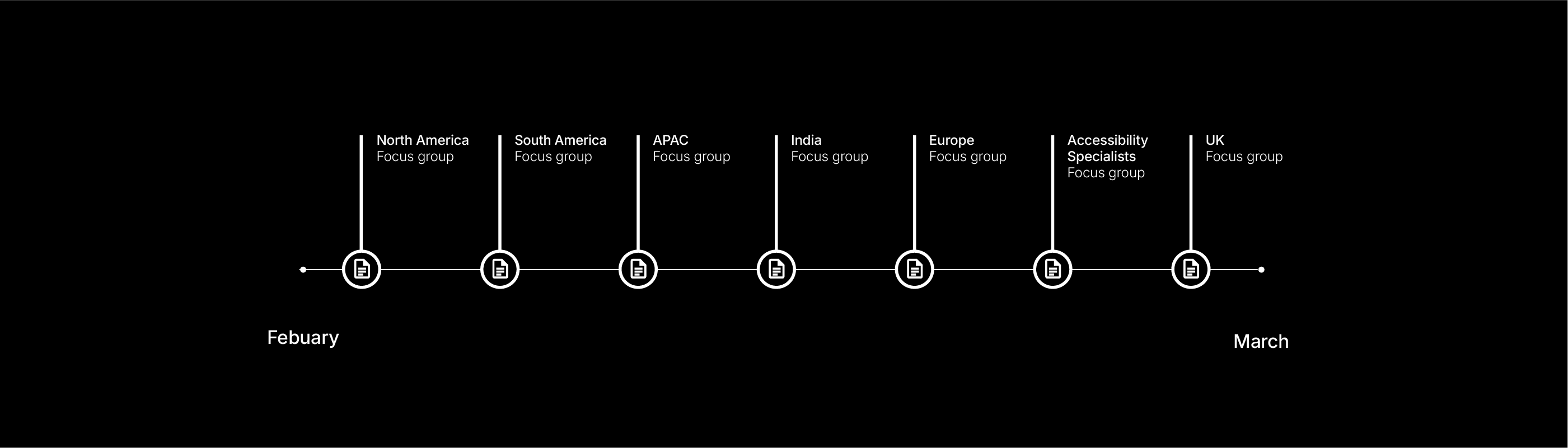
Timeline of seven regional focus groups running from February to March — North America, South America, APAC, India, Europe, Accessibility Specialists, and UK
Fig. 02 / Focus-group timeline February — March
01 / The challenge

The challenge.

Time-intensive analysis.

Across a one-month period, 7 focus-group sessions produced over 9 hours of transcripts. It became clear that insufficient time had been scoped for a Learning Designer to realistically re-read, analyse, and synthesise this volume of material.
Repeating themes.

Early reviews showed that key themes were emerging across multiple conversations. However, identifying and validating those patterns meant jumping back and forth between seven separate transcripts, increasing cognitive load and review time.

Conversational noise.

The sessions were open and conversational, transcripts included: small talk, tangents, clarifying questions. While valuable in conversation, this content added significant noise when reviewing transcripts line by line.

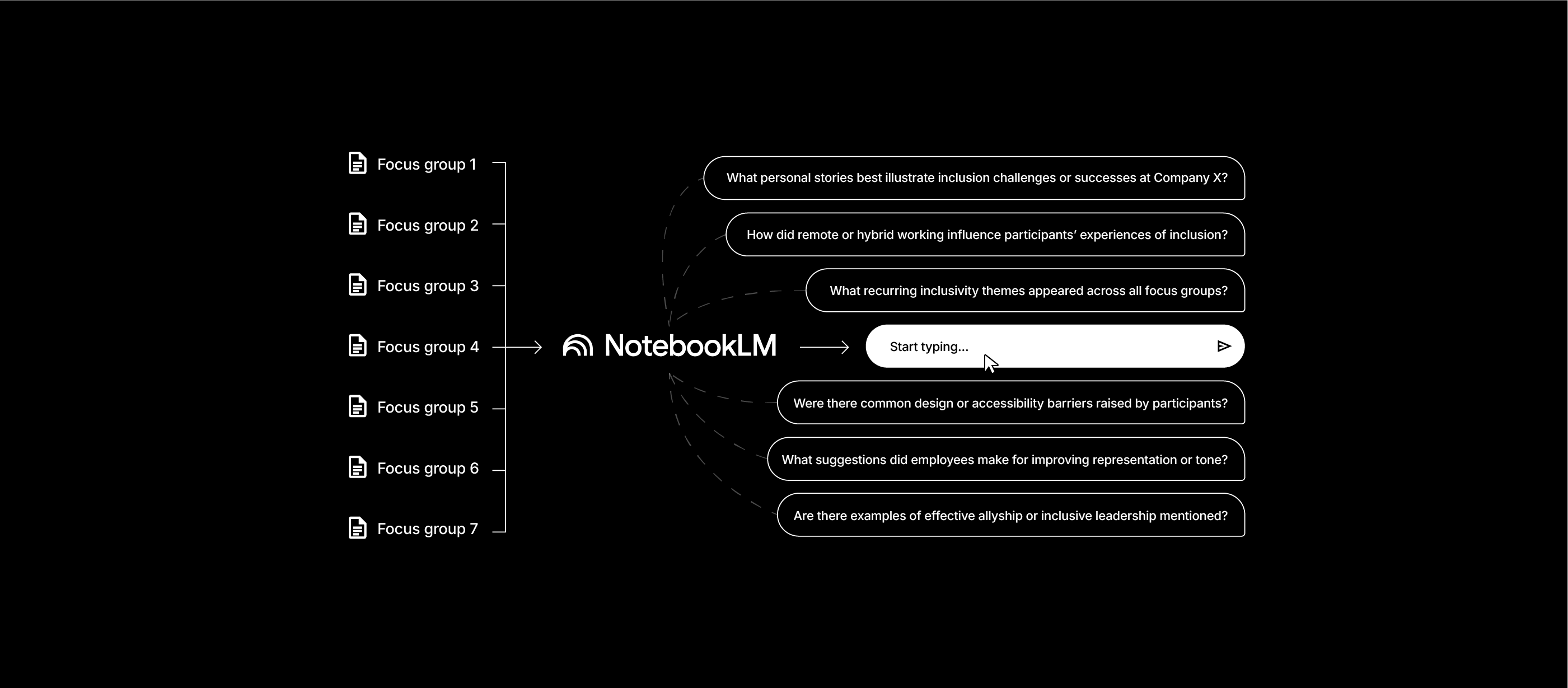
Seven focus-group transcripts feeding into NotebookLM on the left, generating targeted thematic prompts on the right
Fig. 03 / Synthesis flow 7 transcripts → targeted prompts
02 / The solution

The solution.

After identifying a bottleneck in the project workflow, I proposed a more efficient approach using NotebookLM to support the team in collating key themes from focus-group transcripts faster, whilst protecting timelines and avoiding unplanned scripting costs without losing valuable infomation.

Fig. 04 / Live walkthrough NotebookLM in action
03 / The approach

The approach.

Source set-up.

Set-up a shared NotebookLM workspace using real focus-group transcripts.

Walkthrough.

Ran a live walkthrough with the Learning Designer, showing how targeted prompts surface key themes, contrasts, and patterns.

Review efficiency.

Explained how AI-assisted summarisation could reduce review time and protect space for thoughtful scripting decisions, using a secure and responsible AI tool.

04 / Outcome & reflection

Outcome & reflection.

Estimated saving

$1,125

Saved on a single project — with clear potential for further efficiencies across future work.

What was previously a multi-day manual review process was reduced to a few hours, protecting project scope and avoiding unplanned scripting costs. This allowed the Learning Designer to focus on higher-value learning design decisions.

Introducing NotebookLM through practical demonstrations and real project data helped build trust and encourage adoption without adding pressure to the team. This project alone saved approximately $1,125, with clear potential to deliver further efficiencies across future work.

Next / Continue browsing

See more case studies.