Led a streaming-platform concept to reposition a paused Diversity & Inclusion course, balancing enhancement, accessibility, and delivery within Storyline.
Role
Senior Storyline Developer
Client
Production company
Year
2026
Discipline
UX · Interaction Design
Introduction
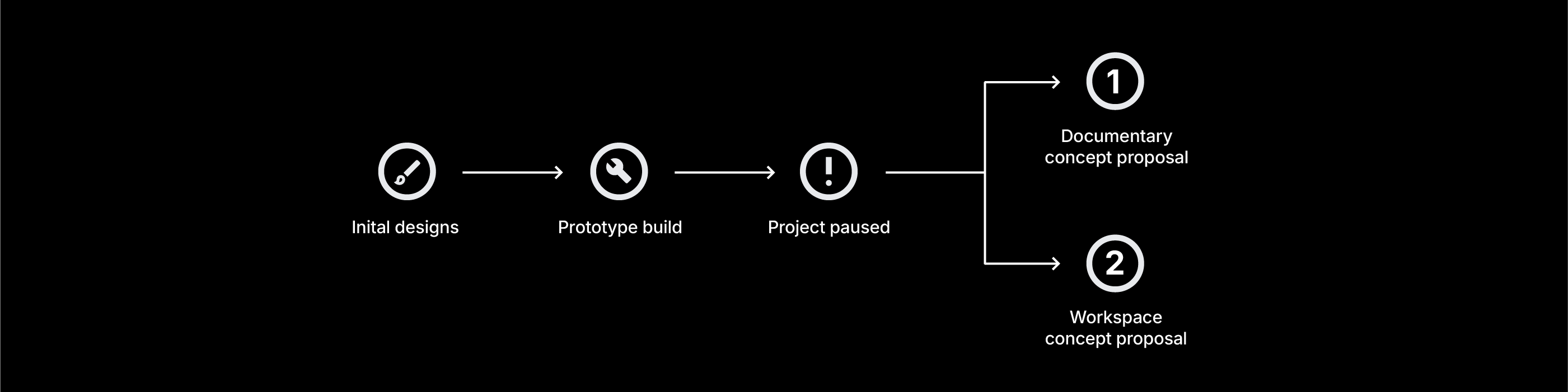
During the prototype stage of a Diversity and Inclusion course for a large production company, the project was paused following an unforeseen change in the client’s business model.
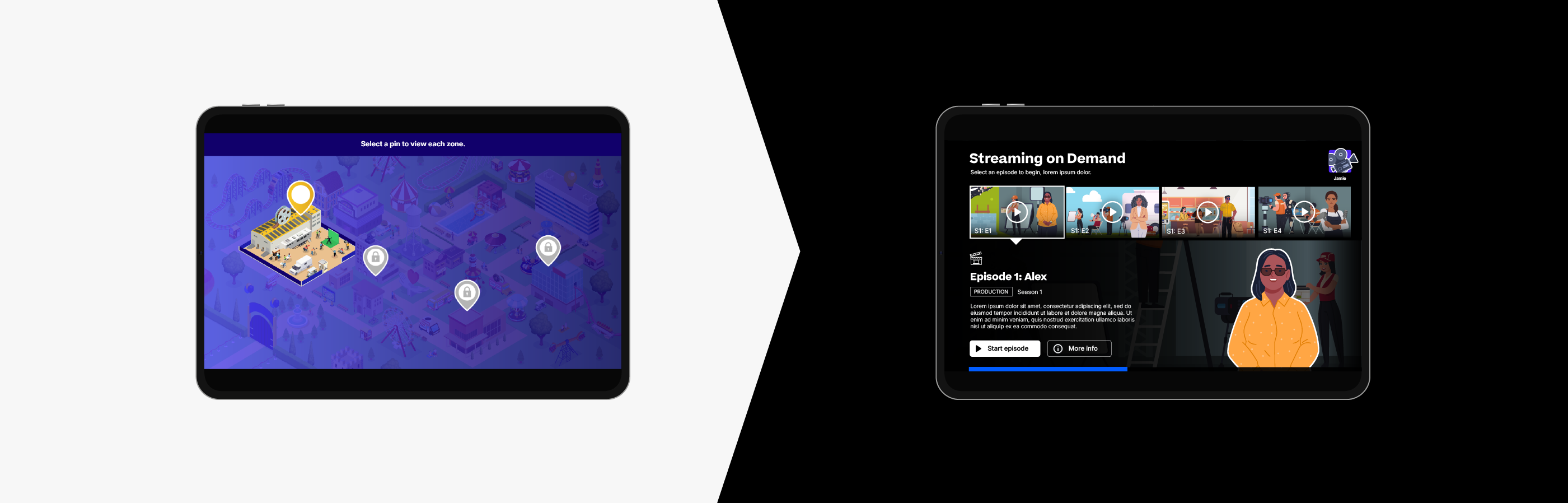
As a result, the initial theme park concept was no longer aligned with expectations, as shown in the video below. Feedback indicated it felt too standard and required a new direction.
Fig. 01 / The first prototype buildBefore the pivot
01 / Resetting the direction
Resetting the direction.
Background & challenge
Background
The initial concept had evolved from a previous vendor’s approach, using a theme-park setting where individual characters shared different diversity and inclusion stories across the organisation.
With the project paused and production time already invested, the challenge was to return to the storyboard and pitch two new conceptual routes that:
Retained flexible character templates and narrative value
Felt clearly more enhanced and modern
Could be delivered realistically within Storyline.
Given the lost production time, it was essential that the revised concepts were clear, confident, and persuasive, enabling quick client alignment and sign-off.
Fig. 02 / Two routes from a paused projectDocumentary & workspace proposals
02 / The task
The task.
My responsibility
My role
Working in parallel with a pre-sales designer, I was responsible for owning and designing one of the two new concept routes.
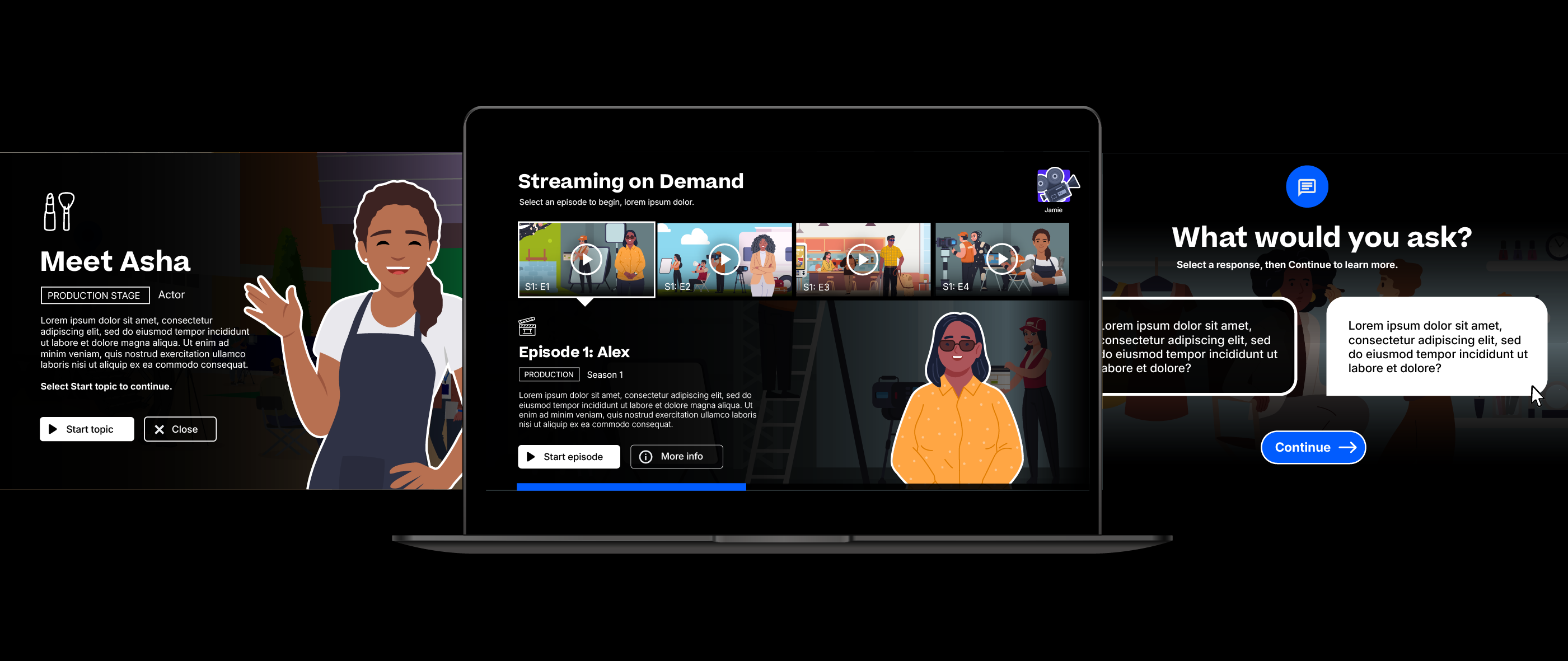
Based on my design and development expertise, I led the documentary / streaming-platform concept, with the following goals and constraints:
Elevated the perceived quality and experience
Used familiar interaction patterns to reduce cognitive load
Maintained high accessibility (WCAG AA) and localisation readiness across nine languages
Balanced creative ambition with technical feasibility in Storyline
My approach balanced early collaboration, visual exploration, and development-led decision making:
Collaborated with the learning designer and pre-sales designer while refining the concept directions
Prioritised template-led design to maximise reuse without compromising quality
Researched familiar streaming-platform UI patterns and created a focused moodboard
Explored enhancement through development-aware ideas (JavaScript indicators, Rive animations)
Embedded WCAG AA considerations at the design stage to ensure feasibility during build.
Fig. 04 / Personalisation featureLearner thumbnail & display name
04 / Key decisions
Key decisions.
Two focused choices
Given limited time, I intentionally focused on two elements that would most effectively sell the concept:
Adding personalisation.
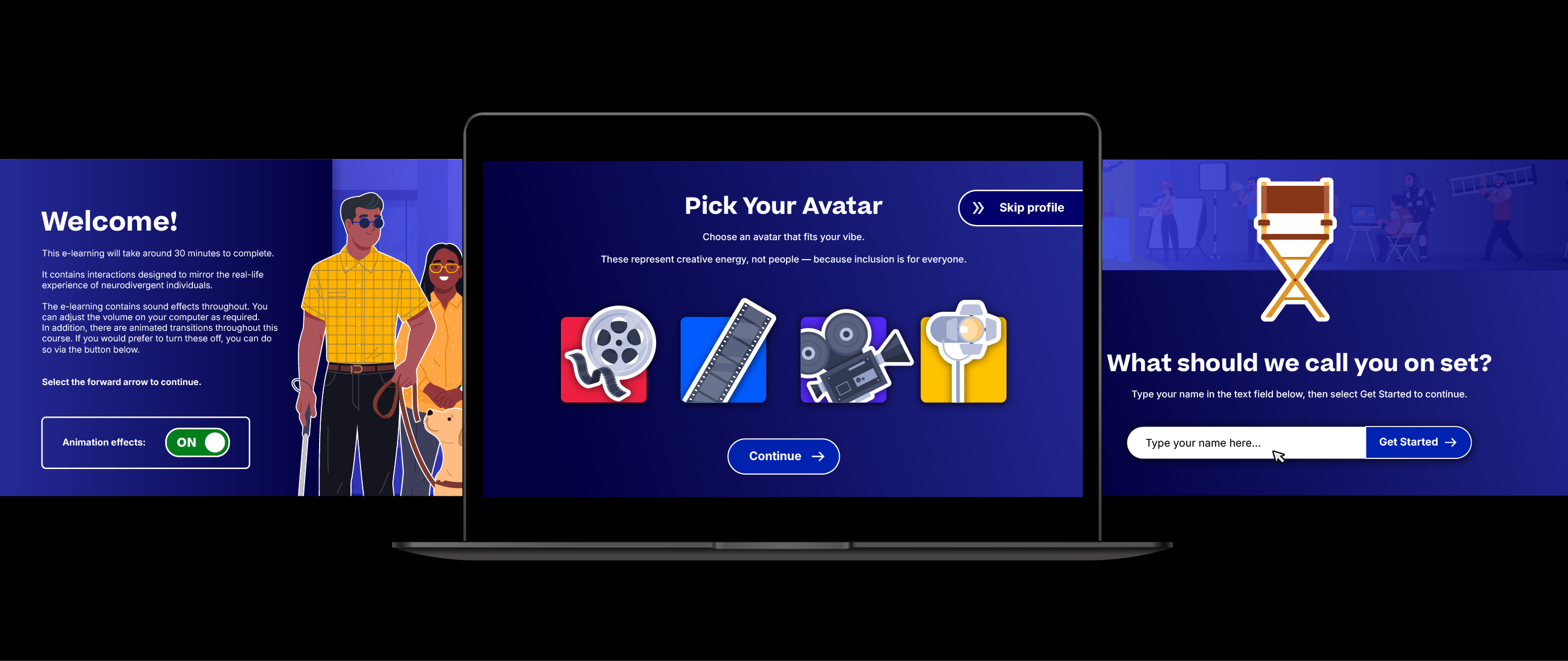
I introduced a lightweight personalisation feature (learner thumbnail and display name) to immediately signal a shift toward a streaming-platform experience. This was designed specifically with implementation in mind, knowing it would help communicate both creative ambition and technical feasibility.
Making accessibility visible, not assumed.
I included a dedicated custom animation screen to explicitly demonstrate how enhanced motion and rigorous accessibility could co-exist, reinforcing that accessibility was a considered design feature, not a limitation.
Fig. 05 / The final buildAfter the pivot
05 / The result
The result.
Outcome, impact, value
Outcome.
The client selected the concept route I designed, allowing the project to move forward, after being paused, and enter a new prototype phase.
Impact.
The revised concept successfully repositioned the course following the client’s pivot request, providing a clearer and more confident direction that balanced enhancement, neutrality, and accessibility.
Business value.
Approval of the new concept re-established momentum at a critical development stage, helped rebuild client confidence, and supported ongoing discussions around expanding the relationship into further work.